
By Gaynor
We had no idea what to expect when we arrived in Sardinia at the start of a one month climbing trip. It had been on Jon’s list of places to visit for some time but never made it to the top, partly because of the challenges getting here, and partly because we didn’t know much about the place. Even on the day of our arrival we still did not really know what to expect.
We had taken the train from the Burgundy region of France, down to the south coast town of Toulon to catch the overnight ferry to Sardinia. A relatively calm 18-hour sailing deposited us in Porto Torres on the north coast just after lunch the following day. A somewhat deserted town, it nevertheless had a small train station with occasional trains down to Cagliari, the capital city down on the south coast. With a couple of tight connections (which worked seamlessly) the train took us through the Sardinian countryside and gave us our first impressions of the island. A largely rugged and rocky landscape, punctuated with small trees and shrub-like vegetation. It was not relaxing scenery to look at and the hardships of life in this rural area were evident in the dilapidated buildings and run-down towns that the train passed by. We arrived in Cagliari in the dark and the short walk to our hotel gave no indication of what the capital was like. The next morning dawned bright and clear and the impressive colonnade along the harbour front was a pleasant surprise. The high-end shops overlooking the neatly moored sailing boats contrasted greatly with our impressions from the north of the island. This was obviously where the tourist money landed.

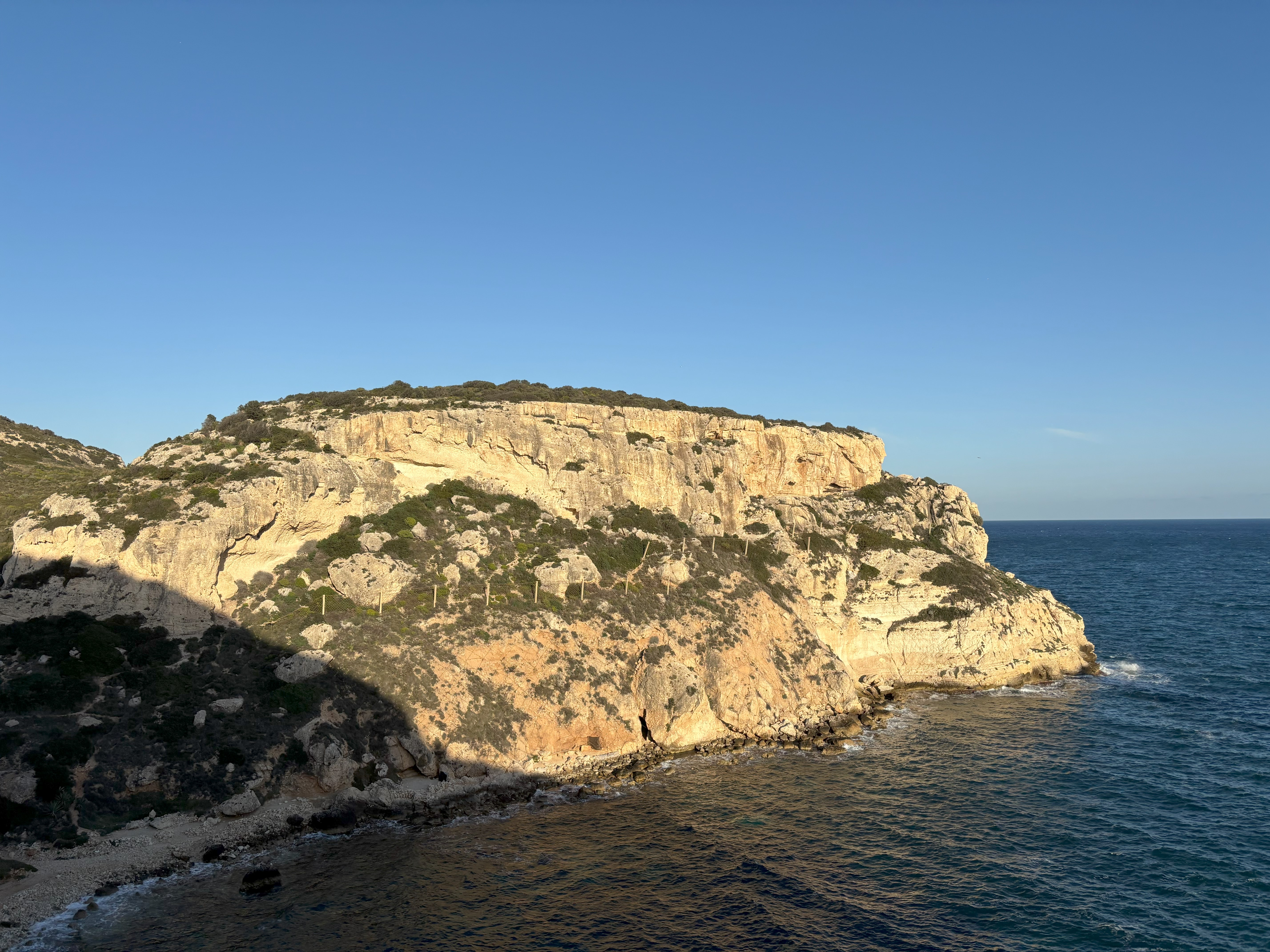
The plan for our first day was to meet up with our friends Mark and Penny who had arrived by plane the night before, and to go climbing on the crags just outside the city. Our expectations were not high, the crags were 10 minutes from the capital city, so we were expecting polished rock and lots of people on a day with perfect climbing conditions. However we were pleasantly surprised. Cala Fighera overlooked a small bay, sheltered from the wind, and the rock was lovely, featured limestone. The routes covered a range of grades from easy 4’s (the only routes to show a little bit of polish), technically demanding 6’s on small edges and crimps, and steep 7’s on rooves and overhangs. The climbing was superb and with only one other team at the crag, we had plenty of options to choose from. We left in the late afternoon as the sun was casting a warm golden glow over the crag, and with a feeling of satisfaction from a successful first day back on rock after a winter spent climbing inside. We could easily have spent another couple of days at Cala Fighera.

On day 2 we left Cagliari and drove towards Iglesias near the west coast, this was going to be our base for the next week. We stopped at the extensive Domusnovas area with the intention of climbing at Castilandia, an isolated crag at the end of a long dirt road. However, it quickly became apparent that our little hire car was not capable of navigating the big ruts and rocks in the track, so we rapidly retreated and had a rethink while we ate lunch beside a field. Our backup option was a crag called Baby Parking on the northern side of the Domusnovas area. It was a short, steep walk in, past the exit to the large San Giovanni grotto, to a fairly uninspiring crag. After a couple of pleasant slabby routes we decided to retreat as the wind was picking up and I think we were all suffering a bit from the sort of slump you get at the start of a holiday when your whole system starts to unwind.
The next day we decided to go closer to the coast and drove over to the Buggerru area to find the Istentales sector. This involved another dirt track, but fortunately this time we were able to get quite far along it, leaving only a 15 min walk up the dry riverbed to the crag. For me, this crag was an absolute joy to climb on. The routes were slabby, on highly textured, pockmarked rock with lots of concretions. It was all about delicate, technical climbing, on tiny holds. Really satisfying but also mentally draining. Again, we had the crag to ourselves, and in such a remote location all the peace and quiet we could ask for.
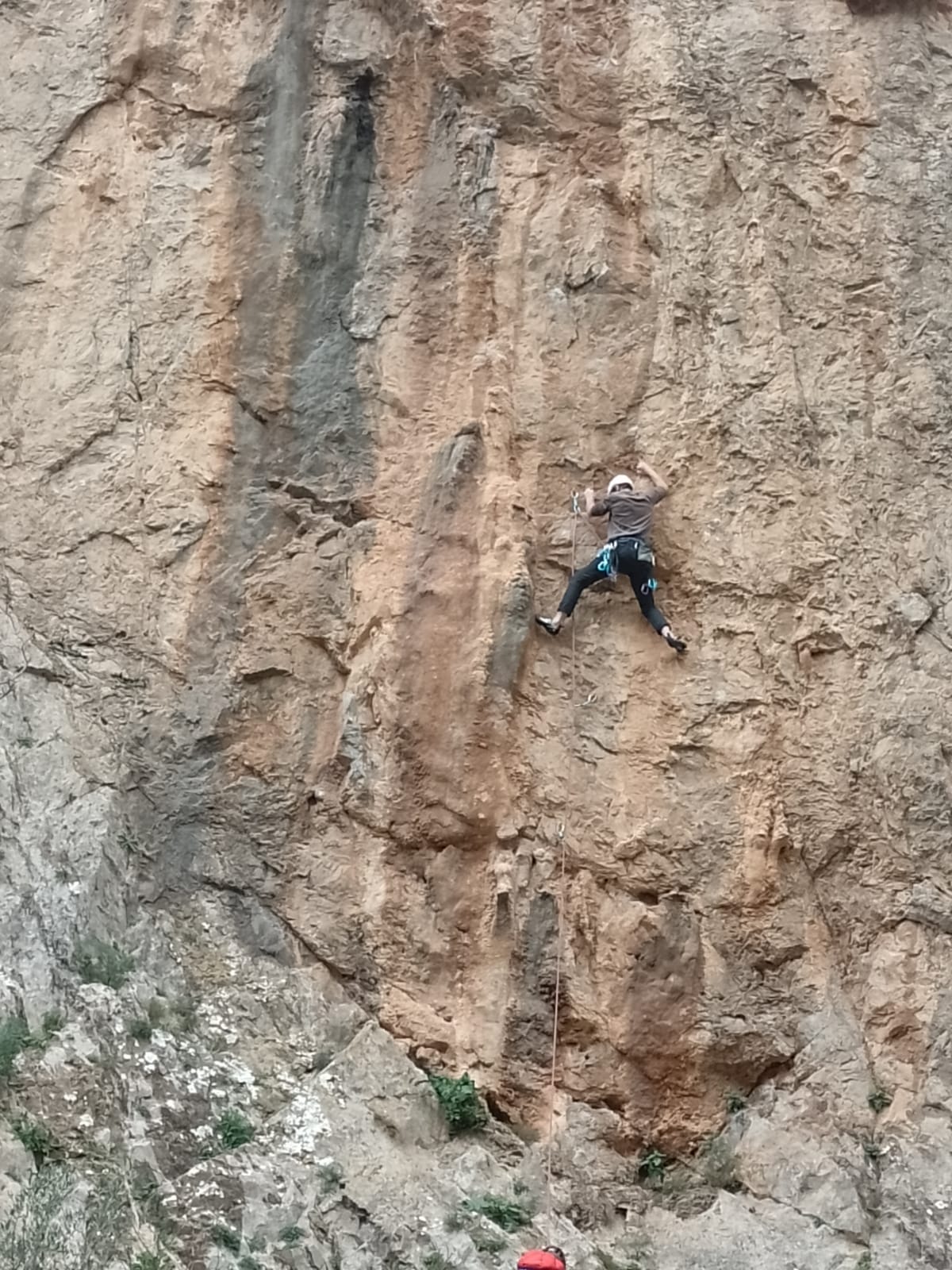
The rest of our week was spent back around the Domusnovas area, climbing at sectors such as Arrampicantro, Piccola Bottega, Sherwood, and finally at Castilandia. For all these crags we parked beside the Chiesetta di San Giovanni and walked in. For Castilandia this was a long 30 minute uphill walk to avoid the dirt road, but in many ways it was one of the easiest and quickest approaches as the path was obvious. For the other sectors that we visited we lost a lot of time trying to find the correct path to the crag, going up false trails and trying to decide if vague paths were made by animals or humans. We only visited each sector once, so we never got the chance to benefit from our hard-won knowledge. Once you know where you are going the guidebook descriptions are sufficient, but when it was all new to us, we found the guidebook lacked the necessary detail and accuracy to get us to the crag efficiently. I am still trying to convince myself that all this extra walking with a heavy sack on my bag is good for my fitness! Arrampicantro is described as one of the most popular sectors in the area, and has a short walk in, but again we found the crag quiet (even on a Sunday) with sharp rock and no polish. All the Domusnovas sectors had technical, crimpy, routes on grey limestone as well as some harder, steeper routes on orange rock, a great combination for both Jon and I. The only exception to this was the Sherwood area which was primarily orange limestone with very few crimps. I found this sector very different to the others and the rock very hard to read, but that is because I much prefer crimpy routes with lots of tiny holds, and they did not exist at Sherwood. Jon, however, was inspired by the tufa routes on display.
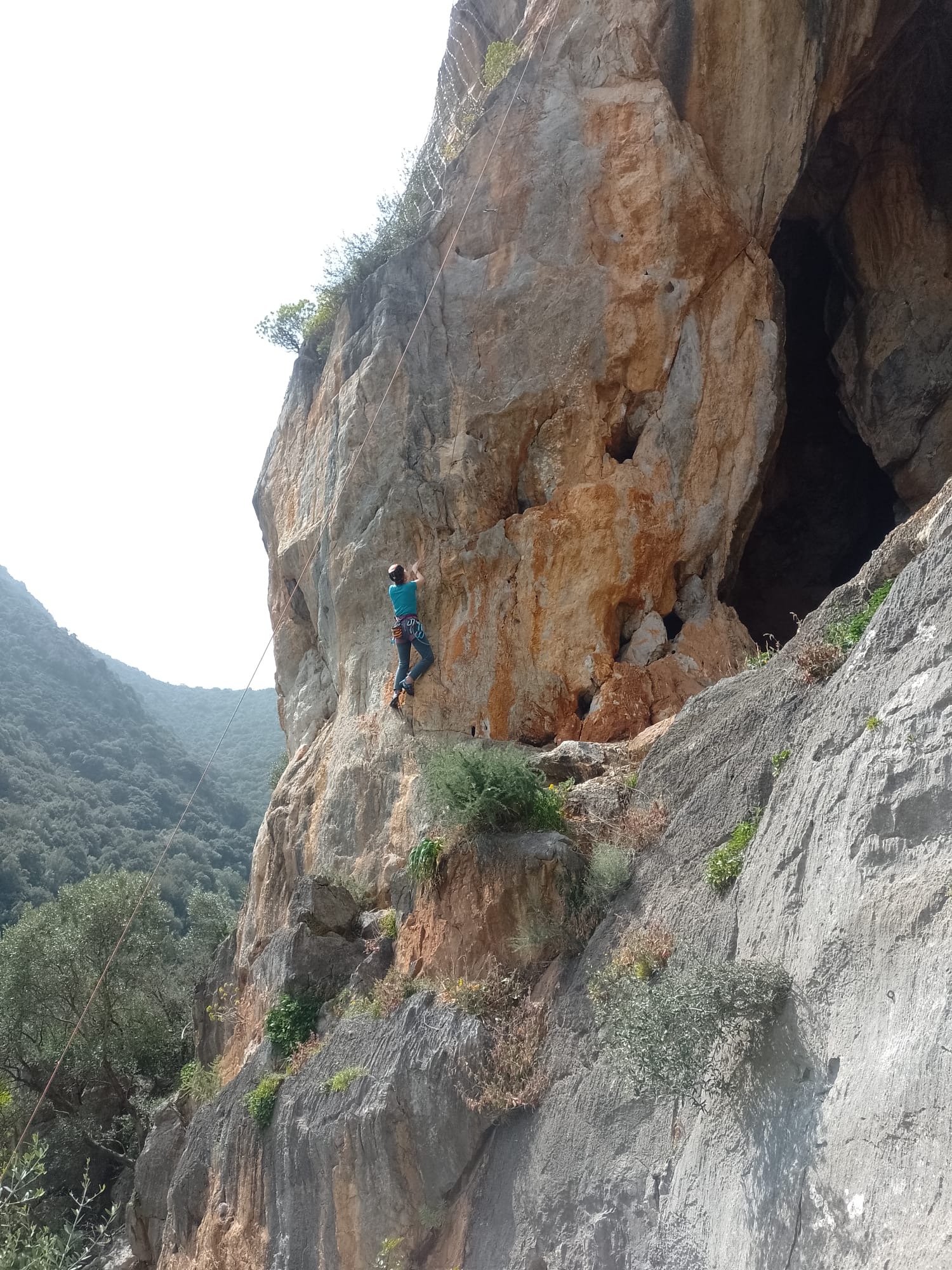
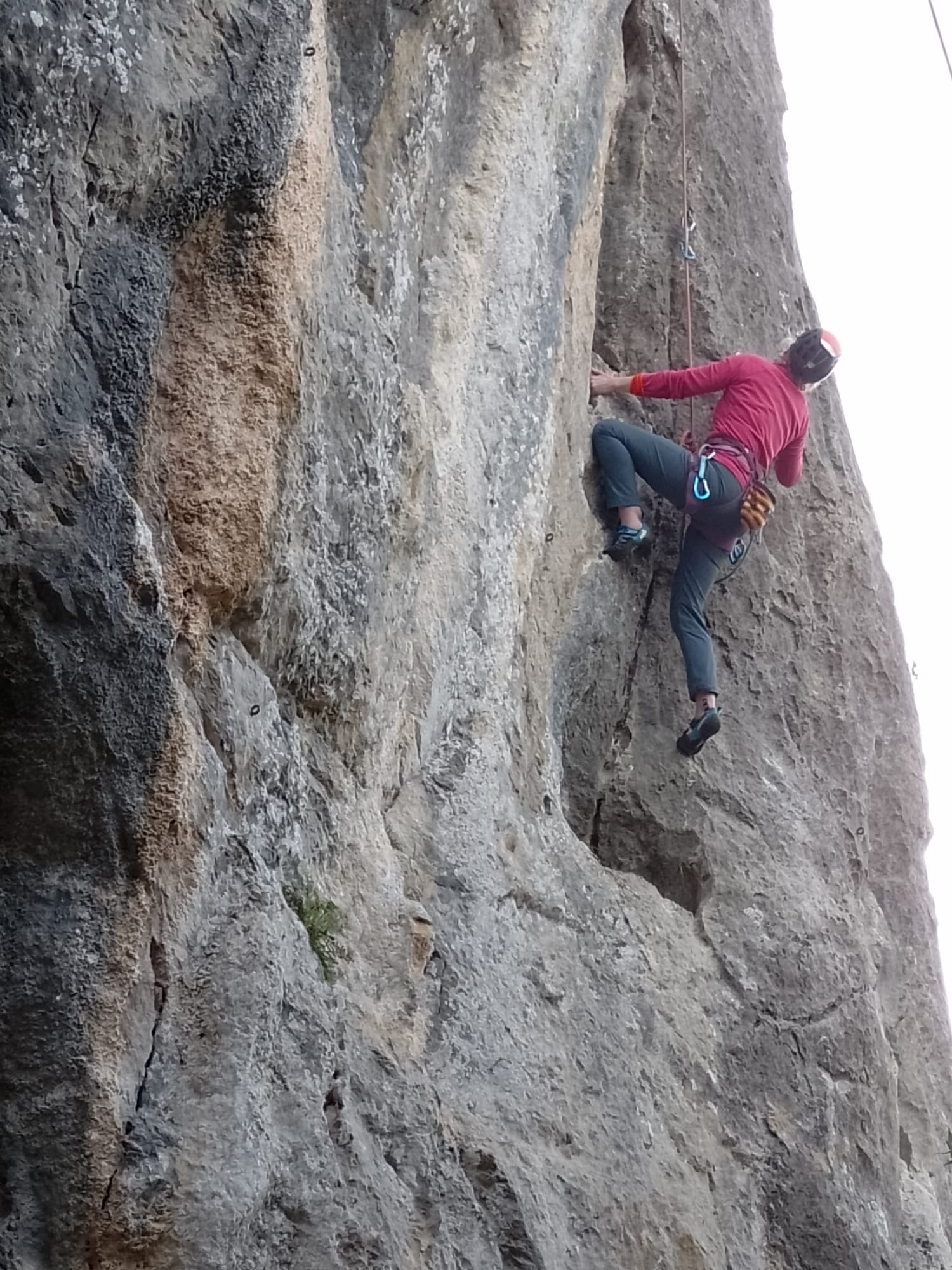
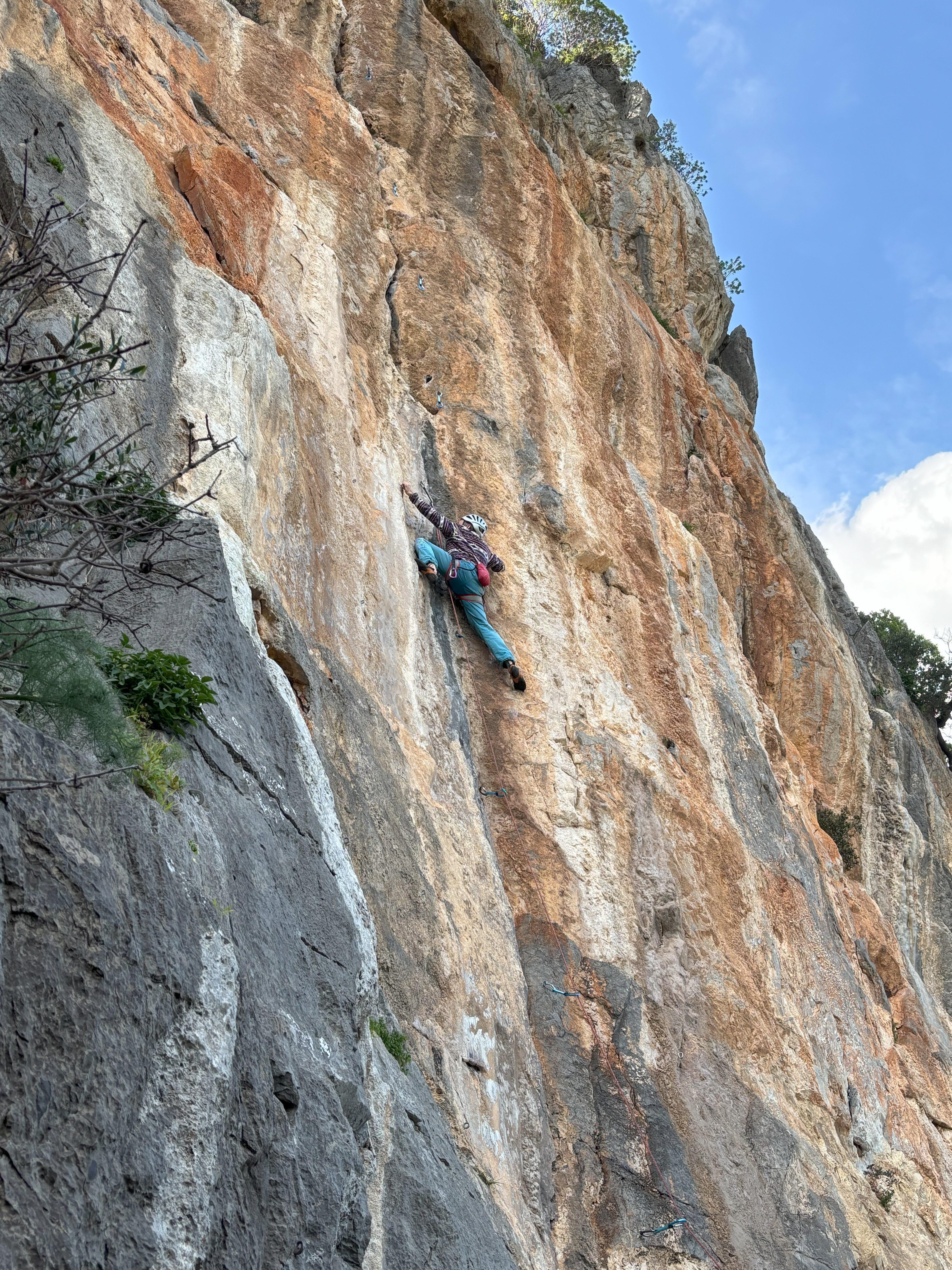
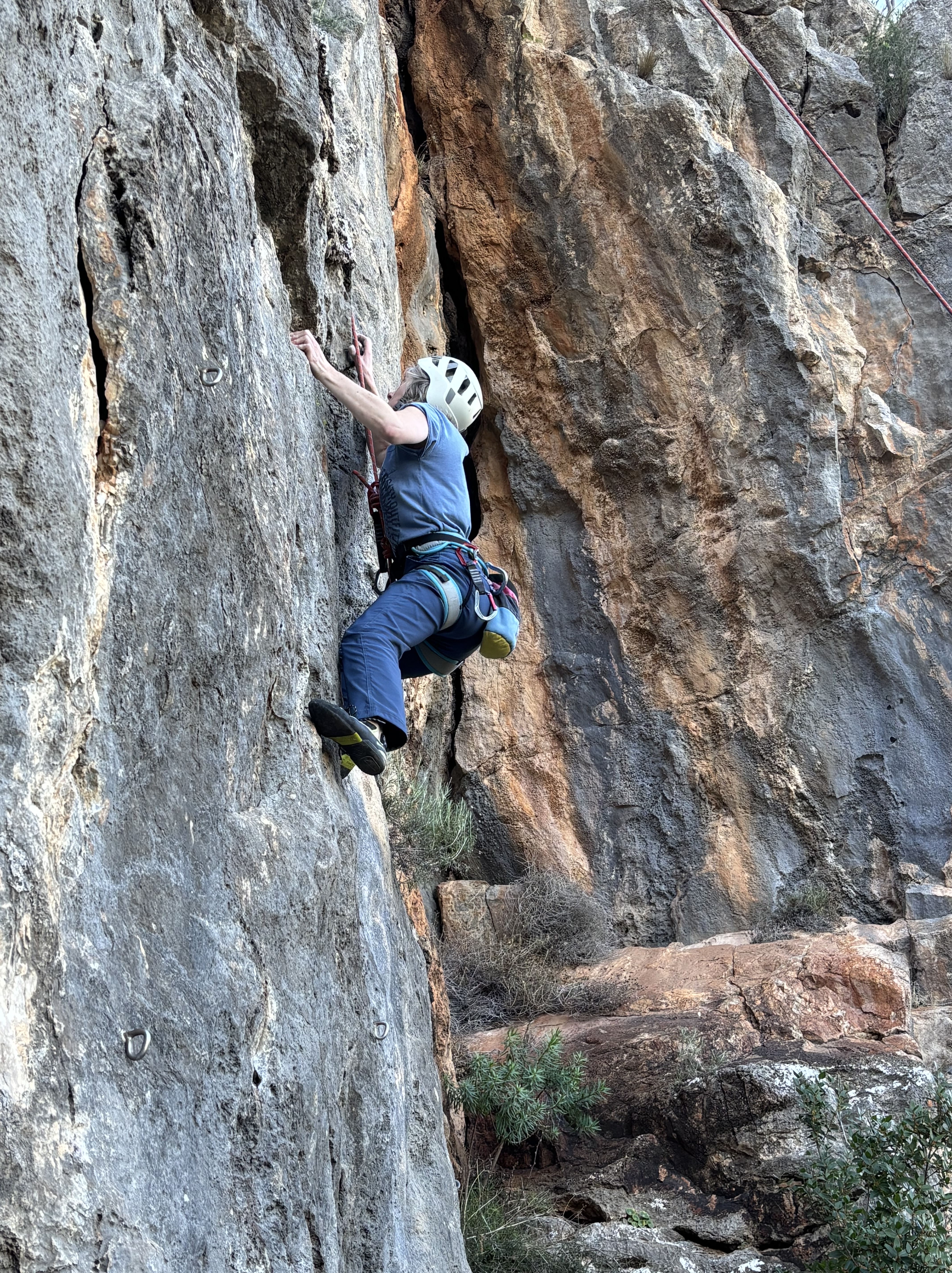
Overall, we had a very enjoyable week climbing in the south west of Sardinia. I would not describe it as a outstanding climbing destination, particularly with the complexities of travelling here (even flying is not straightforward) and the challenges finding the crags, but the routes we have done across grades 5 and 6 have all been enjoyable and worthwhile. I think one week here is possibly the worst length of time, as there are so many different sectors to discover that we have not been able to revisit any, and we have certainly not exhausted our options at any of the sectors. It feels like this first week has been a good warm up, but we haven’t really got our teeth into anything yet.
Our next stop is Ulassai in the mountains near the east coast, and we are hoping that our 10 days there will give us a chance to get to know it, or at least a bit of it, more deeply. Perhaps find a project that needs a couple of days to work out, and start to push ourselves a little bit more. However, the forecast is for rain, so who knows what the next 10 days will bring.
 Ordinary Climbers
great read! Well done. xx
LikeLiked by 1 person
Thank you 😊
LikeLike
You are back…. Great read and we ahve always wanted to go to Sardinia so following along. Hope you are all well and must be fluent in French now 😉
LikeLiked by 1 person
Still working on French and getting very confused being surrounded by Italian! Will keep you posted on the rest of the Sardinia trip.
LikeLike